Blog Details

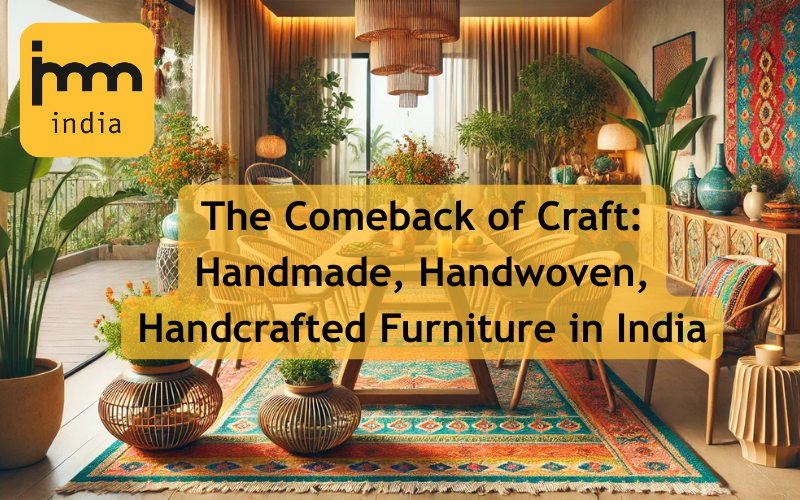
The Comeback of Craft: Handmade, Handwoven, Handcrafted Furniture in India
Why India’s age-old craftsmanship is becoming the future of interior design.
Share Page
✨ WHAT IS FUELING INDIA’S UNSTOPPABLE CRAFT REVIVAL?
Have you noticed how suddenly everyone is talking about artisanal furniture?
Why are handcrafted chairs, handwoven cane loungers, natural wood tables, and craft-rich
décor pieces dominating Pinterest, Instagram, design exhibitions, and luxury stores?
Why are designers, architects, homeowners, and even global brands shifting back to handmade
craftsmanship in an era where machines can produce faster, cheaper, and in endless volume?
What changed?
And more importantly—
What does this craft revival mean for the future of Indian interiors and the furniture industry heading toward 2026?
The answers reveal something powerful:
India is witnessing not a trend, but a cultural renaissance.
✨ THE HEART OF INDIA IS BACK: WHY HANDCRAFTED FURNITURE IS MAKING A GRAND COMEBACK
Walk into any contemporary Indian home today and you’ll see one unmistakable shift—
our design roots are returning.
After years of colder, industrial, mass-produced furniture dominating metros and modern apartments, consumers are craving warmth, textures, emotional connection, and authenticity. This shift is global, but in India, it is deeply personal.
India’s 5,000-year legacy of woodwork, cane weaving, bamboo craft, metal inlay, textiles, joinery traditions, terracotta, and carpentry is impossible to ignore. Every region—from Rajasthan’s sheesham artisans to Nagaland’s bamboo weavers—has contributed unique design languages to India’s cultural identity.
Today’s consumer wants pieces that feel meaningful, rooted, and crafted—not manufactured.
This isn’t nostalgia.
It is a rediscovery of who we are.
✨ THE NUMBERS SPEAK LOUDER THAN WORDS
This movement is backed by undeniable growth data.
- India’s handicrafts exports crossed USD 4.3 billion in 2024, led heavily by furniture, woodcraft, and artisanal materials.
- The global handmade furniture market is projected to reach USD 62 billion by 2030, growing at 6–8% annually.
- Urban demand for cane, rattan, and wicker furniture in India has surged 40% in the last 3 years.
- A staggering 70% of interior designers report specifying more craft-based furniture today than they did five years ago.
Clearly, handcrafted furniture isn’t just desirable—it is driving the next major wave in interior design.
✨ WHAT MAKES HANDMADE CRAFT SO SPECIAL?
Handcrafted furniture is valued because it carries everything modern consumers seek—emotion, authenticity, uniqueness, and sustainability. Every handmade piece is shaped by skilled hands, years of practice, and traditions passed down through generations. This slow method of crafting builds soul and story into the product in a way machines never can.
Handcrafted design also aligns naturally with sustainability. Most artisanal pieces use responsibly sourced natural materials such as cane, rattan, bamboo, teak, reclaimed wood, natural fibres, vegetable dyes, and handmade textiles. With sustainability becoming a foundational pillar of global design, the handcrafted sector is naturally positioned for long-term relevance.
No two handcrafted pieces are ever identical, making them ideal for luxury interiors, boutique hotels, and curated residences that want distinctiveness. At the same time, the craft revival supports over 7 million artisans across India, providing livelihoods, skill continuity, and global visibility.
✨ INDIA’S TOP CRAFT-RICH REGIONS MAKING HEADLINES
Across India, regional craft clusters are shaping global design conversations.
Rajasthan continues to lead with stunning sheesham furniture, brass inlay, bone inlay, and detailed wood carving. Its pieces are known for royal aesthetics and intricate craftsmanship, inspiring top brands like Gulmohar Lane, The House of Things, The Rug Republic, Saraf Furniture, and Jodhpur-based artisanal studios.
Kerala has become the heart of cane and rattan revival, producing airy, tropical-inspired furniture. Its timeless woven chairs, loungers, and tables influence brands like Cane Boutique, Freedom Tree, Opaque Studio, Urban Ladder’s natural collections, and The Wicker Story.
Nagaland and Assam dominate bamboo and wicker furniture, now trending in eco-resorts, cafes, boutique villas, and contemporary homes. These regions are being spotlighted by brands such as Boho Studio, Mianzi, and eco-conscious northeast design firms.
Gujarat and Kutch bring forward rustic woodwork, lacquer art, turned wood accents, and bold handcrafted colors, widely used by brands like Fabindia, Coppre, and Orange Tree Furniture.
Punjab remains a stronghold for solid wood carpentry and farmhouse-style furniture that is making a comeback in Indian luxury homes.
These regions are not just creating furniture—they are influencing the design vocabulary of
India’s modern interiors.
✨ INTERNATIONAL BRANDS LEANING INTO CRAFT
Even the world’s biggest furniture brands are leaning towards handcrafted aesthetics.
IKEA partnered with Indian artisans for its handmade INNEHÅLLSRIK collection, showcasing global admiration for Indian craft.
BoConcept incorporated woven and handmade elements inspired by Asian craftsmanship in its new lines.
Muuto, Hay, Ferm Living, Crate & Barrel, and West Elm are all integrating natural materials
like cane, rattan, ash wood, and handwoven textiles into modern collections.
Design doesn’t see borders anymore—craft is becoming a universal design language.
✨ INDIAN BRANDS LEADING THE CRAFT-LED REVOLUTION
India’s handcrafted furniture story is being driven by some exceptional brands redefining quality,
innovation, and global relevance.
Gulmohar Lane continues to lead with artisanal sofas, premium upholstery, and handcrafted wood furniture.
Phantom Hands, globally celebrated for its handcrafted mid-century chairs and cane seating, has showcased at Milan, Dubai Design Week, and global galleries.
The House of Things brings together craft-driven designers like Namak India, Tranceforme,
Bent Chair Studio, Home Canvas, and Studio Carolina—creating India’s largest luxury craft marketplace.
Pepperfry’s Woodscape & Artisan Collections make handcrafted furniture accessible to mainstream consumers.
Fabindia Home remains a pioneer in craft-centric home solutions.
Orange Tree, Alankaram, Sirohi, Mianzi, Baro, and Channapatna-inspired brands are shaping the future of sustainable artisan-first design.
These brands prove that handcrafted isn’t slow—it is thoughtful, timeless, and future-ready.
✨ WHY DESIGNERS LOVE CRAFT TODAY
Handcrafted furniture gives designers something rare—emotional texture. When you enter a space filled with handmade pieces, the warmth is immediate and unforgettable. Designers value the tactile depth, customization possibilities, rich visual presence, and the cultural resonance that crafted pieces bring into modern interiors. As the world moves towards meaning-driven living, handcrafted design has become the emotional centerpiece of projects everywhere.
✨ WHAT’S NEXT? THE FUTURE OF CRAFT IN INDIA (2025–2030)
The next decade will witness handcrafted furniture blending tradition with innovation. Emerging trends include sculptural wooden forms, cane-metal hybrid furniture, bamboo-based outdoor series, handwoven upholstered seating, and smart craft-meets-technology workflows, where CNC precision meets hand finishing.
India is also seeing village-based micro factories producing globally competitive collections while ensuring artisans stay rooted in their regions. In hospitality, luxury resorts and boutique stays are turning to handcrafted interiors to achieve deeper cultural immersion. Craft is evolving—refined, premium, modern, and ready to influence global design maps.
✨ CONCLUSION: THE CRAFT RENAISSANCE IS JUST BEGINNING
India isn’t merely reviving craft—
India is redefining it for the world.
As global consumers shift toward sustainability, mindful living, emotional spaces, and
meaningful design, handcrafted Indian furniture is emerging as the face of modern luxury.
Designers want stories. Buyers want authenticity. Artisans want legacy. Brands want purpose.
Handcrafted furniture brings them all together.
It is not a trend—it is the soul of Indian design.
✨ imm india 2026: WHERE THE WORLD WILL DISCOVER INDIA’S CRAFT FUTURE
imm india 2026 will be the most influential platform where craft-led brands, artisan-driven studios, material innovators, global manufacturers, and designers converge to showcase the future of handcrafted design.
From carved wood to sculpted bamboo, from cane craft to handwoven seating—
craft will be one of the strongest design narratives at imm india.
Whether you’re a brand, architect, retailer, sourcing professional, project buyer, or design
lover—
imm india 2026 is where the next chapter of India’s craft story will unfold.
More Blogs




VISITOR PROFILE
- Architects & Interior Designers
- Large Buying Organizations
- Furniture Retailers & Wholesalers
- Distributors & Agents
- Project Developers & Builders
- Specifiers & Consultants
- Importers & Exporters
- E-commerce Platforms
- Hotels, Restaurants & Cafe
- Industry Professionals & Media